Galengrat-Verschneidung - Galenstock
Very nice route, a true classic. The dihedral pitches are simply pure fun to climb.
The line was first climbed in 1966 by Hans-Peter Geier and Dieter Kienast, and re-equipped over the years (Stadler 1991, Klingler 1994, Infanger & Arnold 2014/2018).
Galengrat-Verschneidung — Galenstock, 3586 m
6a (5c obl.) / 11 SL / 330 m / SW / Granit — start 2940 m
Pitch by pitch
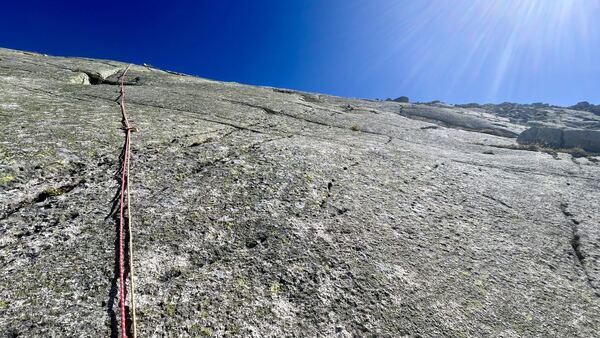
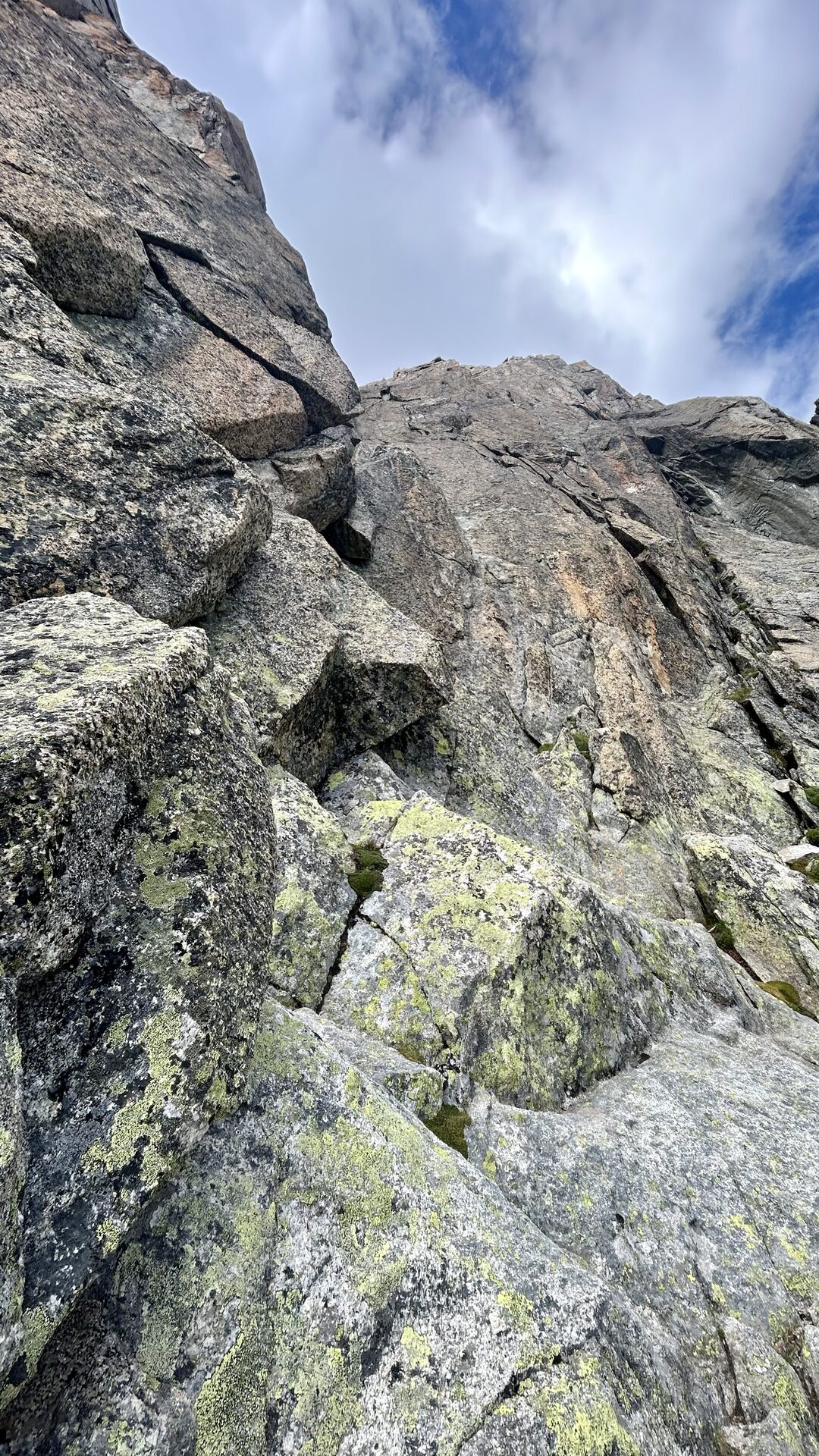
Pitch 1 — 6a. Up on good holds to a place below a crack. Then it gets a little bit weird in terms of where to go. One can see a bolt on the left — maybe another variation of the pitch; some removed bolts are also visible there, without plates. Maybe the same guerilla bolt-removing action as on the Niedermann on Gross Bielenhorn last season, or I started the wrong route? Anyway, going either up the crack or traversing left and up takes you to the anchor. There is an alternative way to get to the anchor (not checked, only researched on the web) starting on the left side of the 6a; this option should in theory be easier (5a), but it is clean and has to be fully protected — might be an option if there is a line at the start.
Pitch 2 — 5c/6a. Nice, athletic boulder problem at the start, diagonally up via a slightly overhanging roof into a corner, then up and slightly left. You get to an abseil anchor; you can either end the pitch here or climb around 10 m more to another anchor.
Pitch 3 — 5a. Climb up and left on the slab. Easy, but with big unprotectable runouts.
Pitch 4 — 5b. Continue left and up to an anchor below a pillar.
Pitch 5 — 5a. Climb the pillar directly up, airy, to an anchor on top of it. There is an option to detour to the right from the anchor at the start of the pitch — possibly a harder variation, however this seems illogical as it requires a quite long traverse on a grassy band.
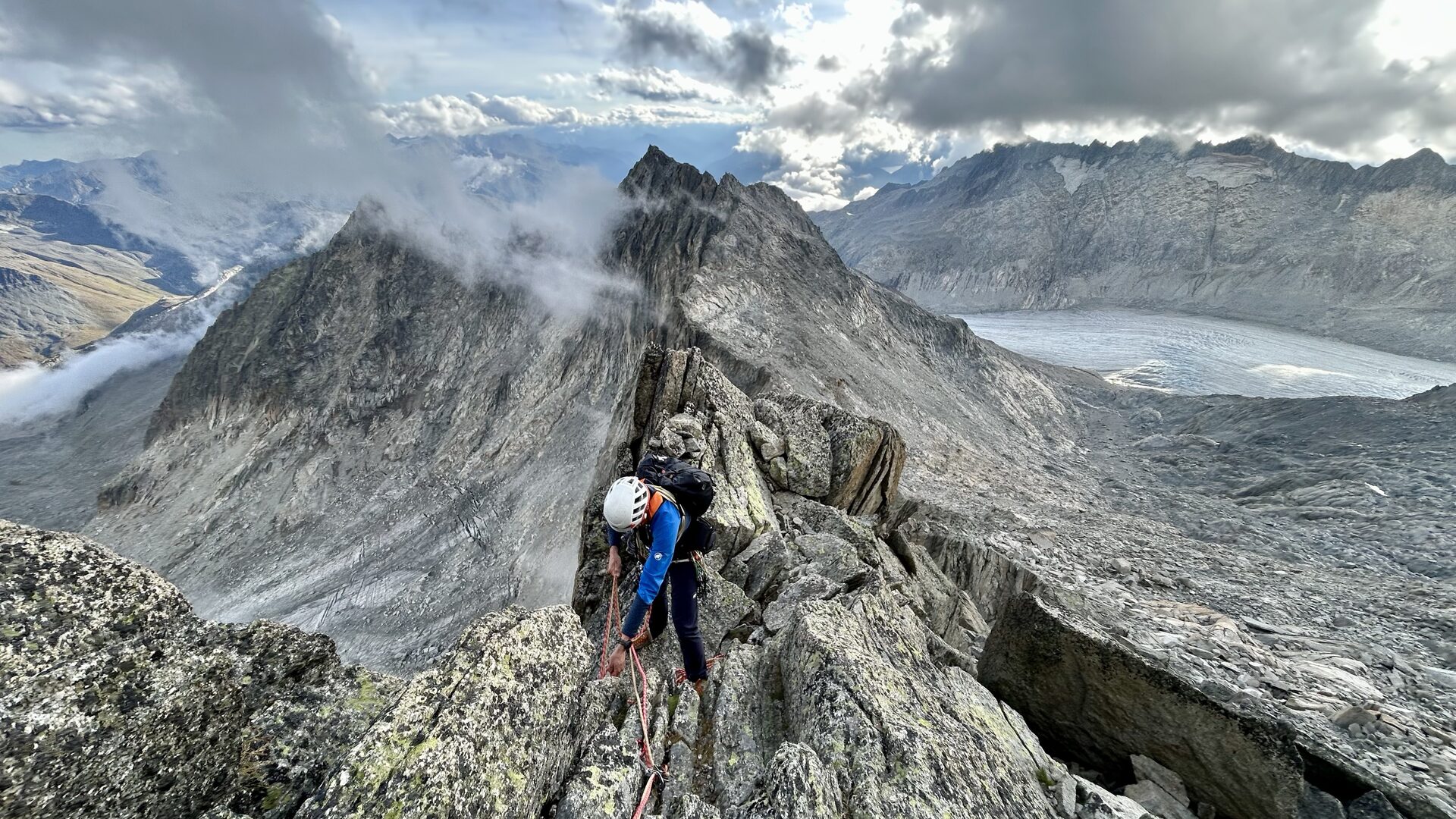
Pitches 6 + 7 — 5b. Sporty start, on good holds and well protectable. Then easier through the grassy band to the anchor below the head wall. Here we used almost the entire 50 m rope length; this could also be split, there is an anchor at the start of the band.
Pitch 8 — 5b. Bouldery start that eases out, to finish with nice athletic moves in the crack leading to the anchor.
Pitch 9 — 5a. Nice, short pitch to get to the start of the dihedral system.
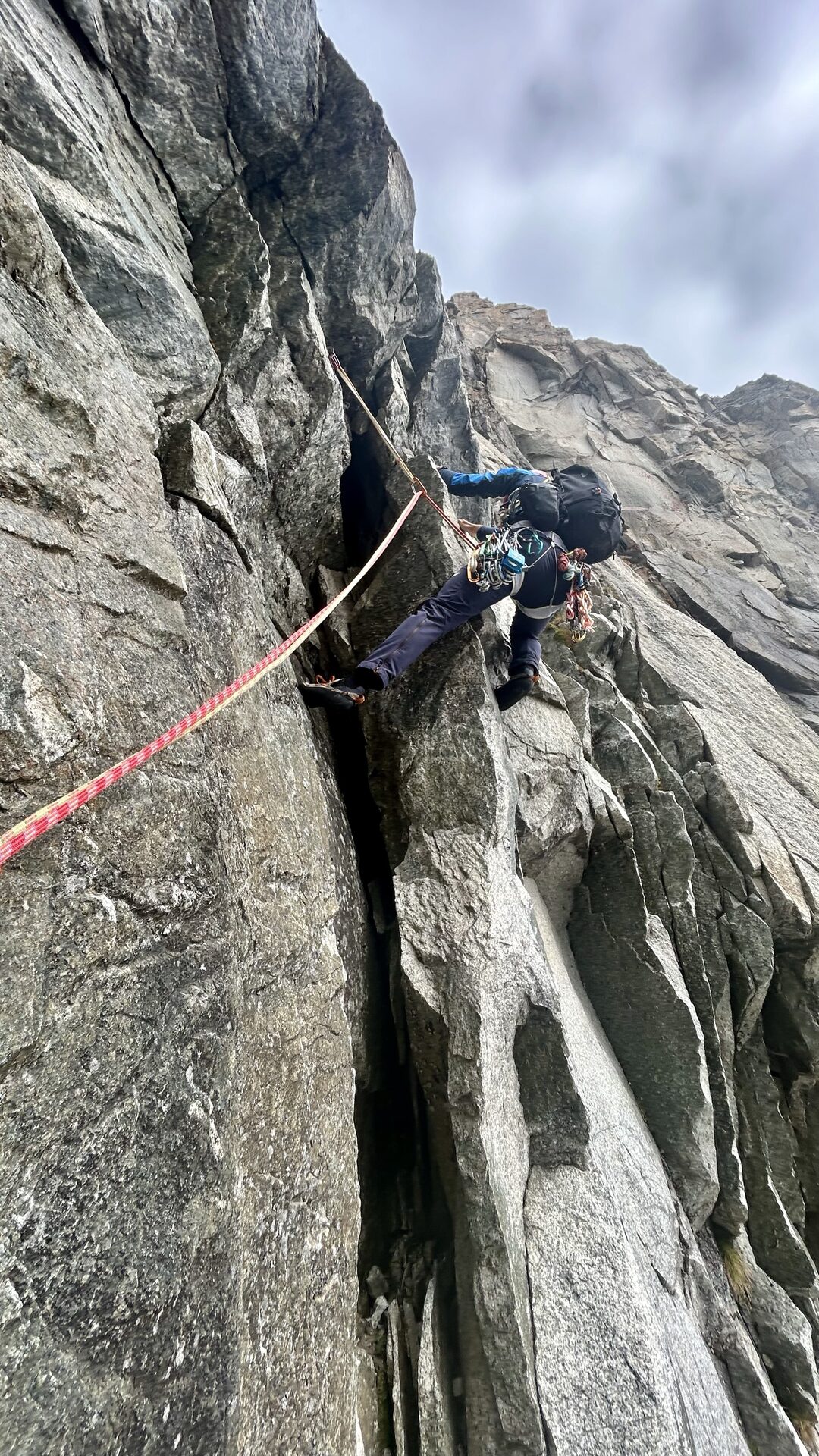
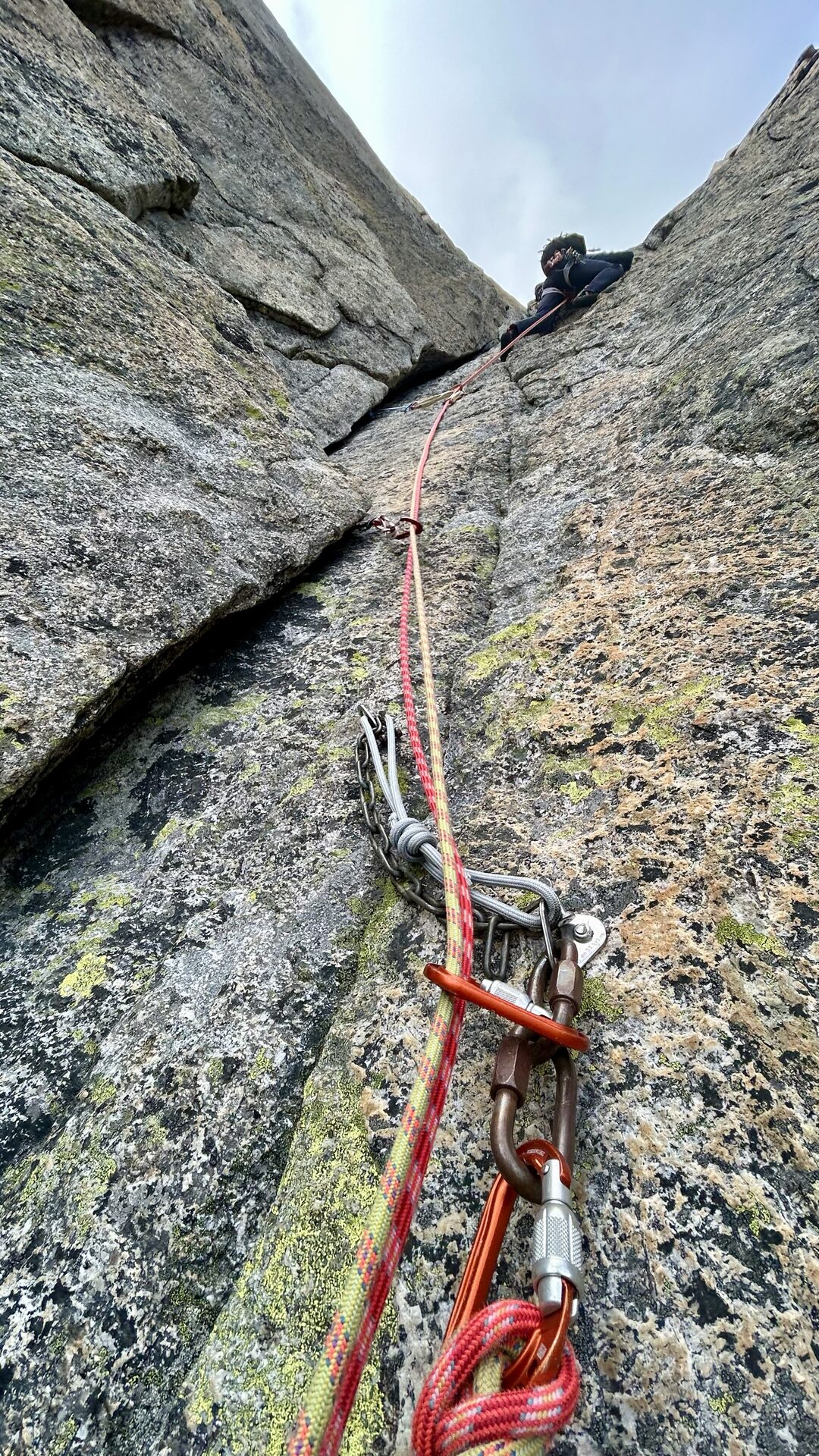
Pitches 10 + 11 — 5a. The best pitches on the route, with amazing dihedral, corner and crack climbing that can be climbed in various creative ways. Cams can be placed pretty much everywhere.
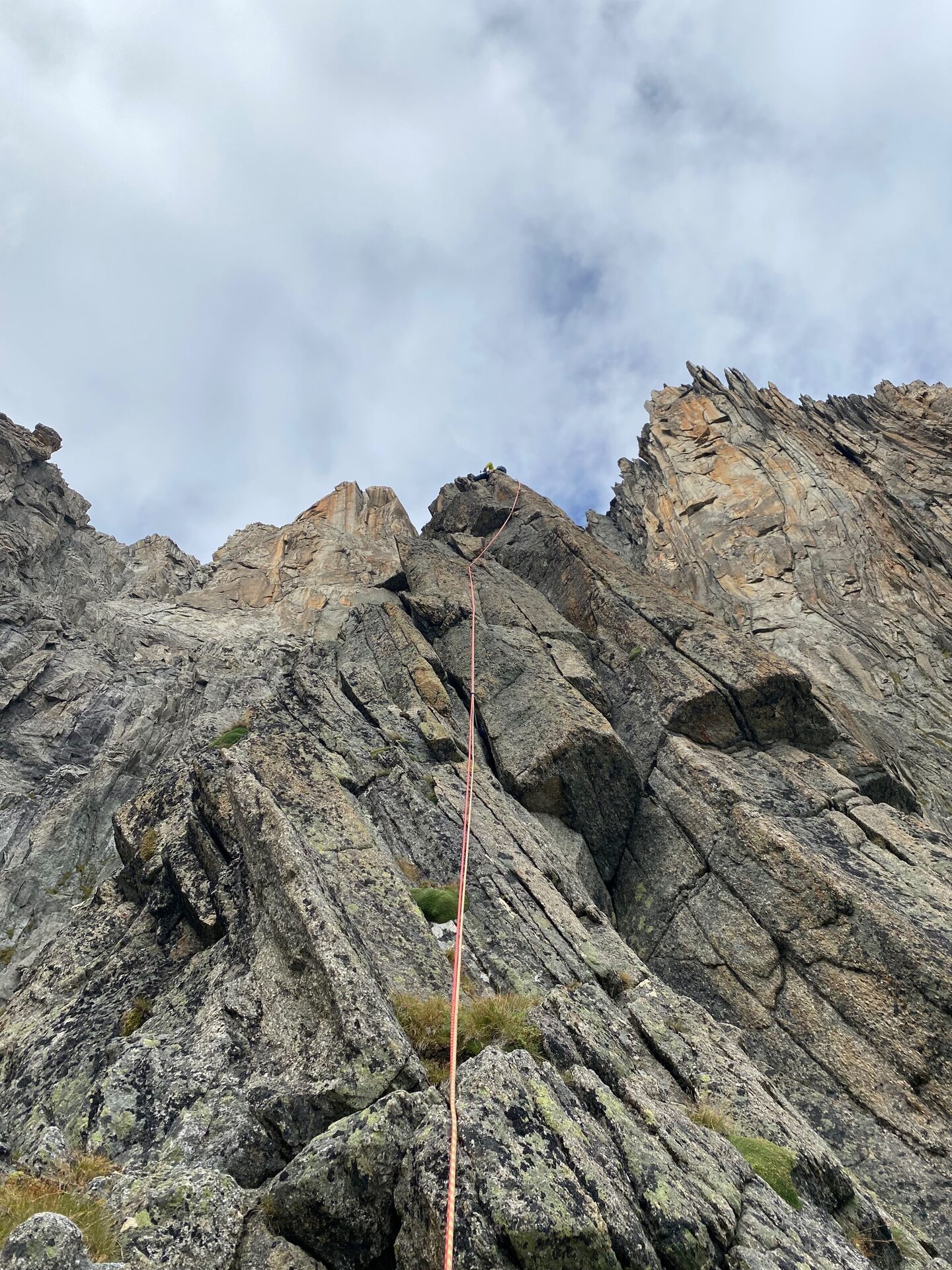
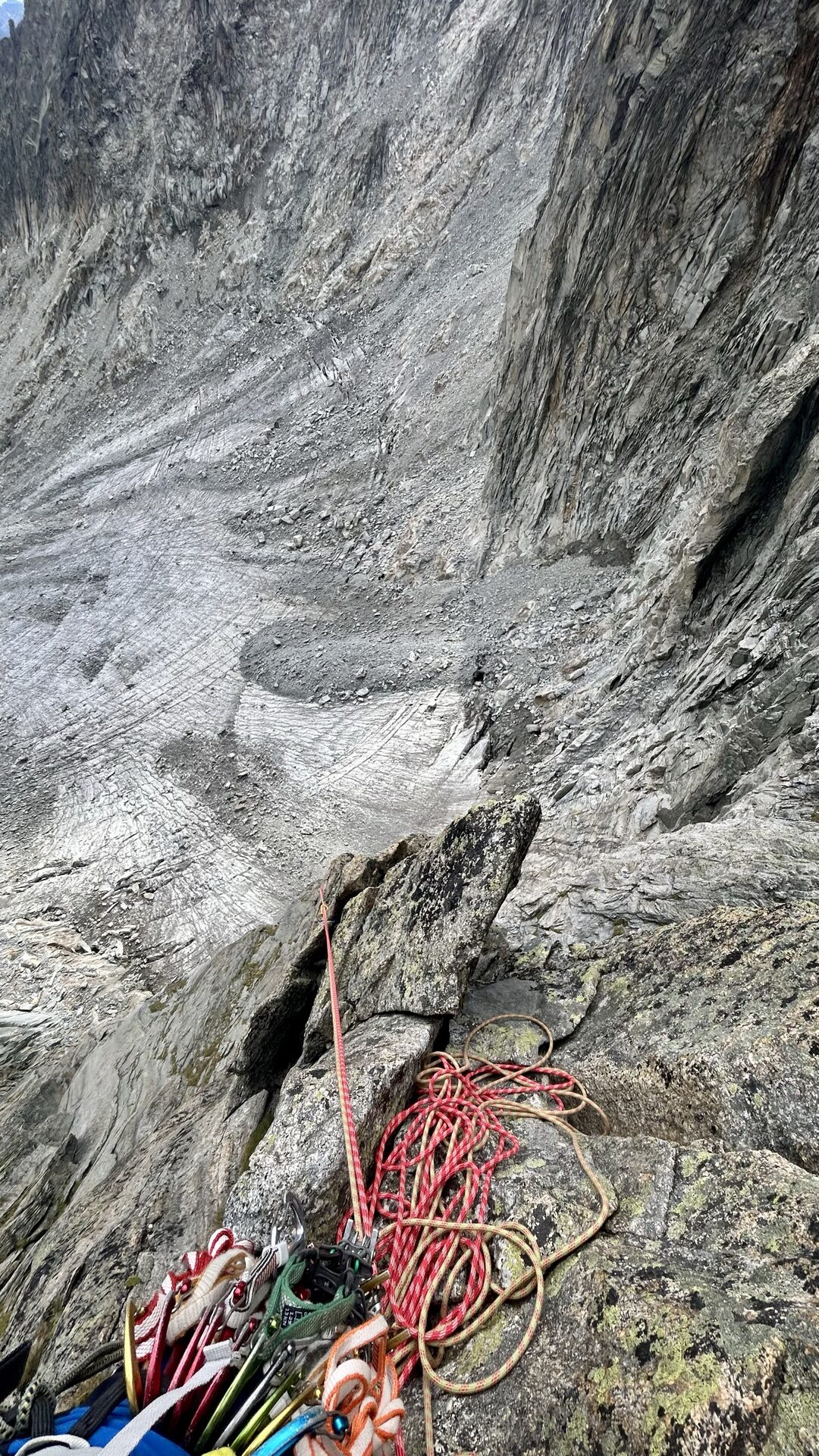
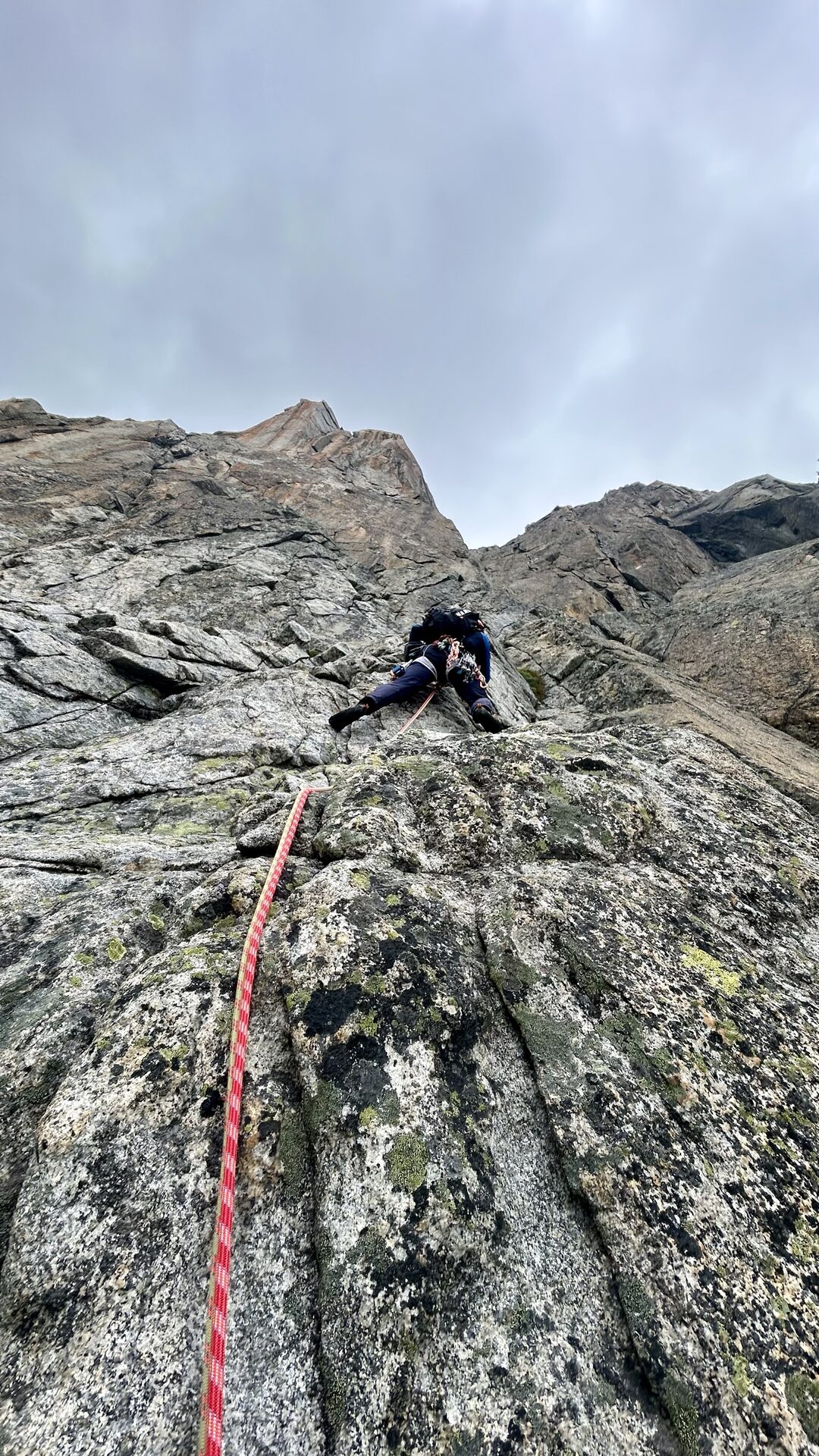
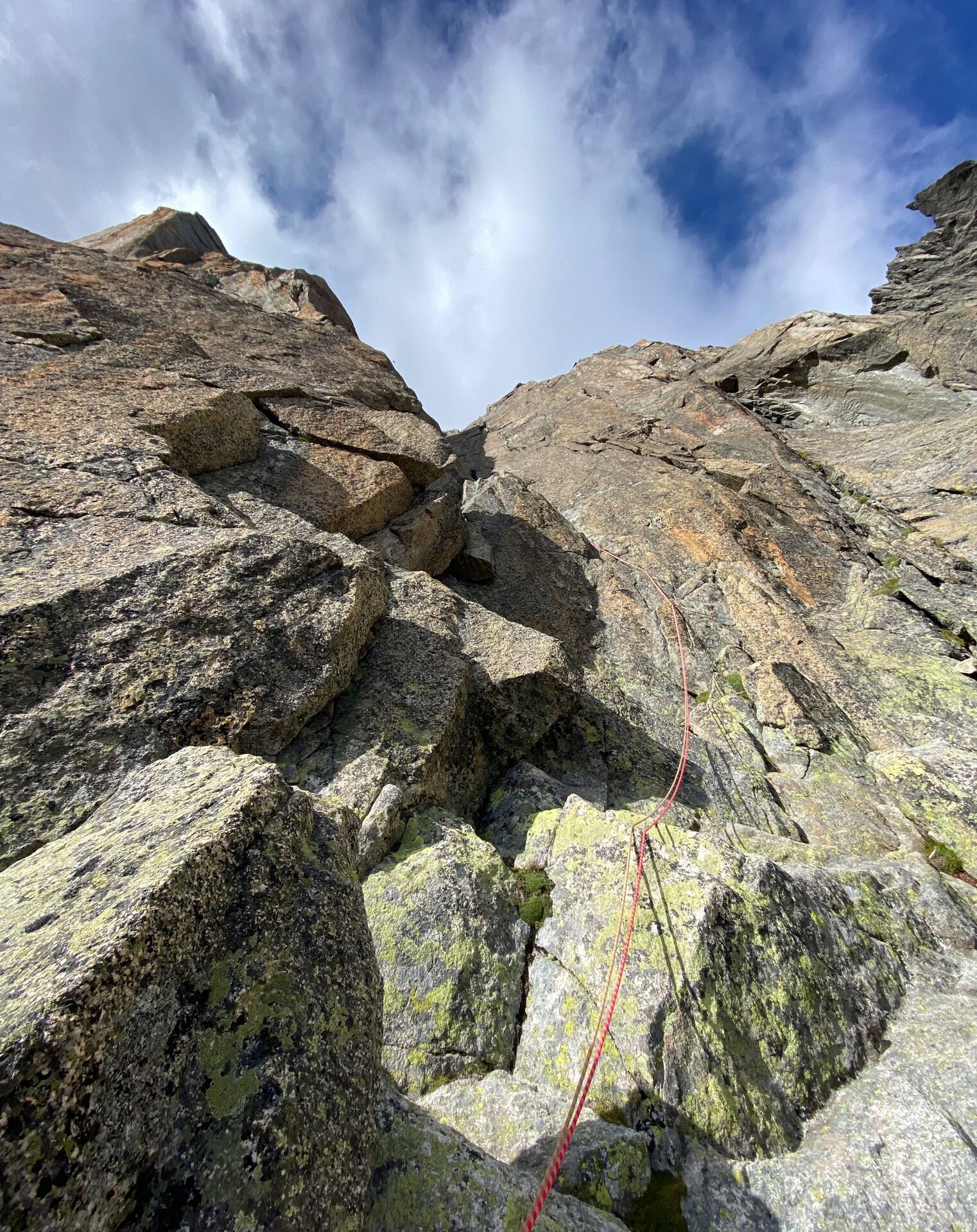
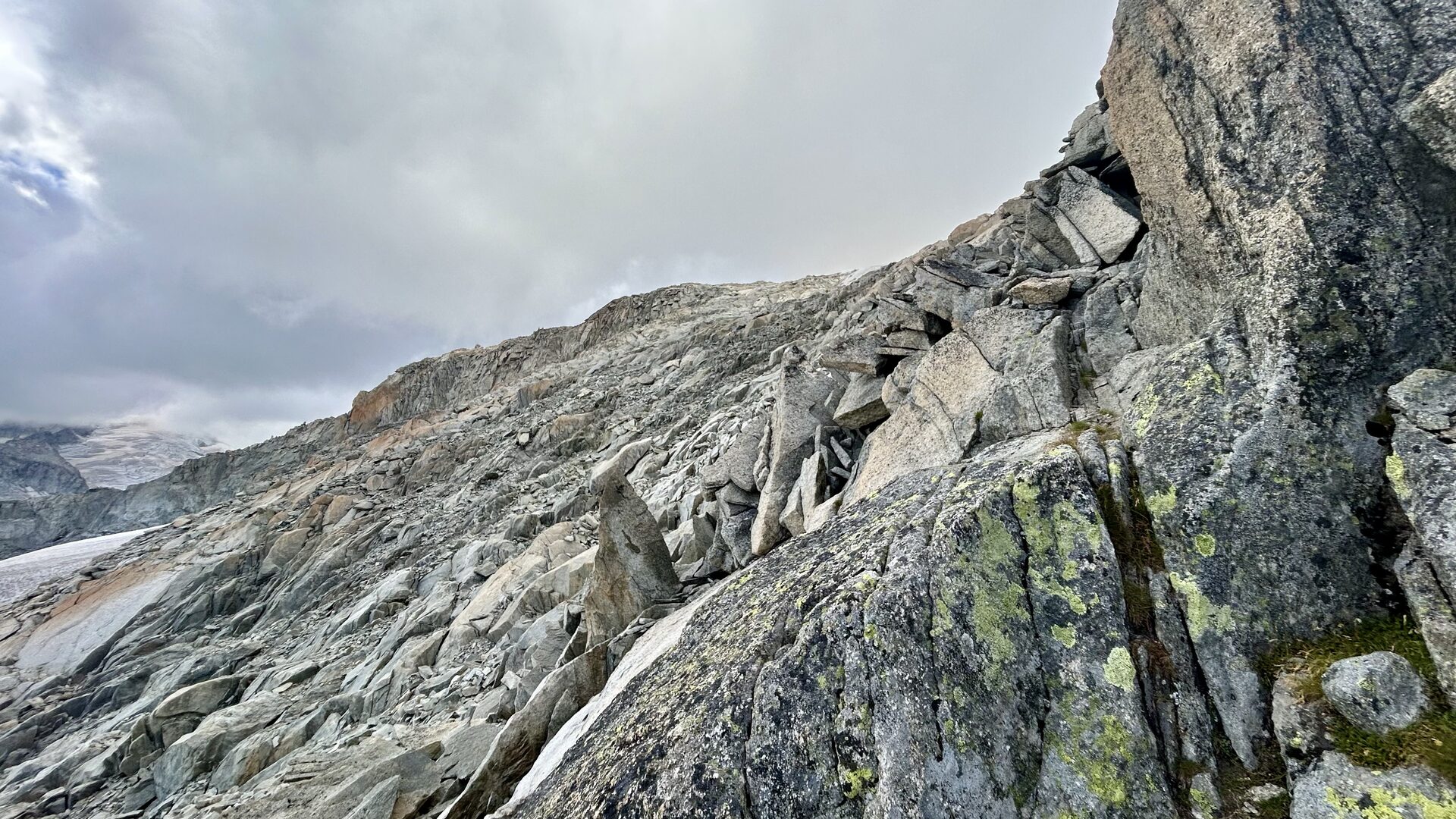
Descent
We abseiled via the route using the available anchors. The rope got stuck on pitch 10 and required re-climbing part of it. It got stuck again on the abseil of pitch 2 — we managed to release it by climbing 7 m to the left and pulling from a different angle. We were using the recommended anchors for roping down and were very vigilant about the rope leading when abseiling, so we recommend care when going down: there are many places where the rope can get stuck.
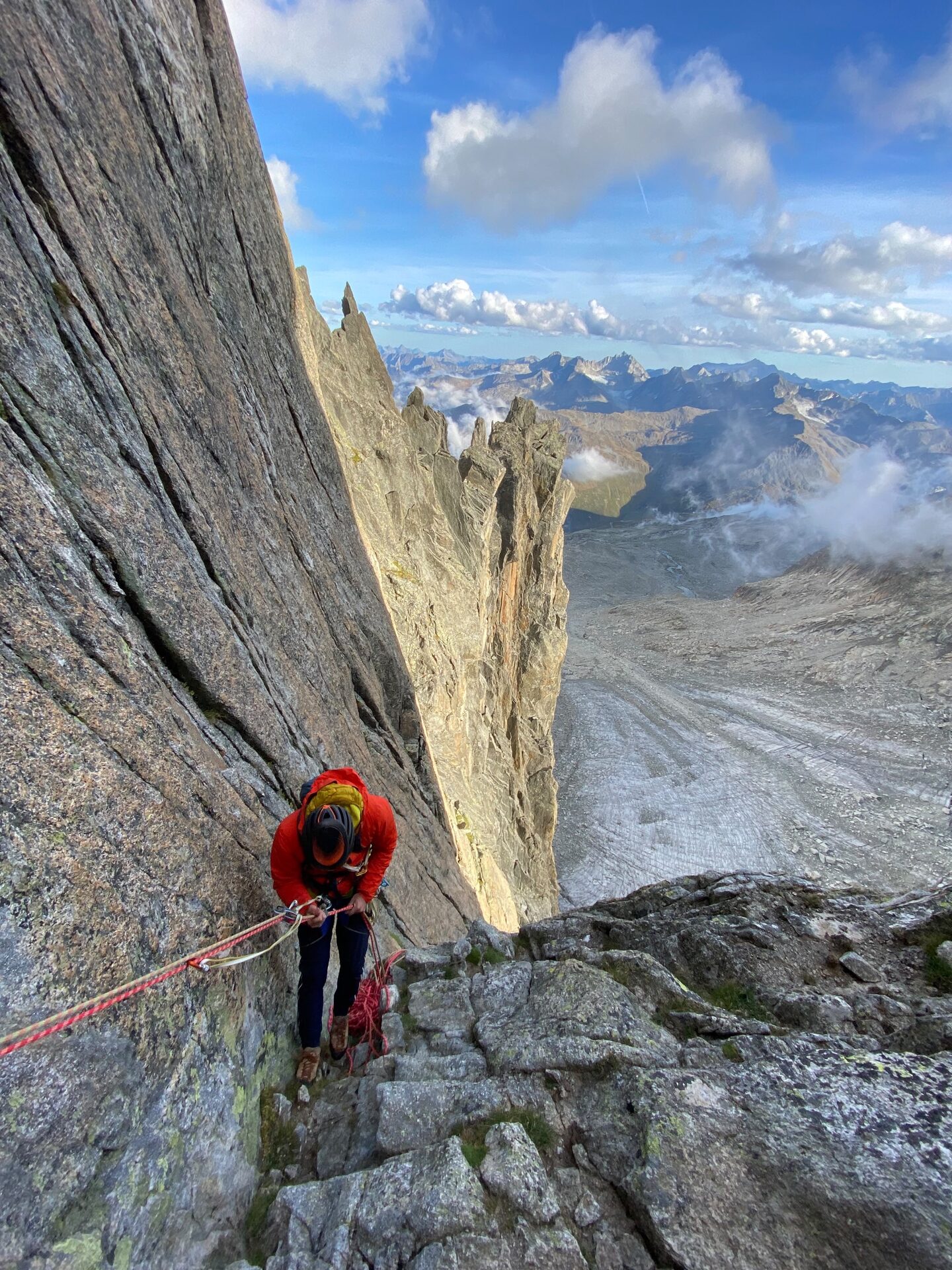
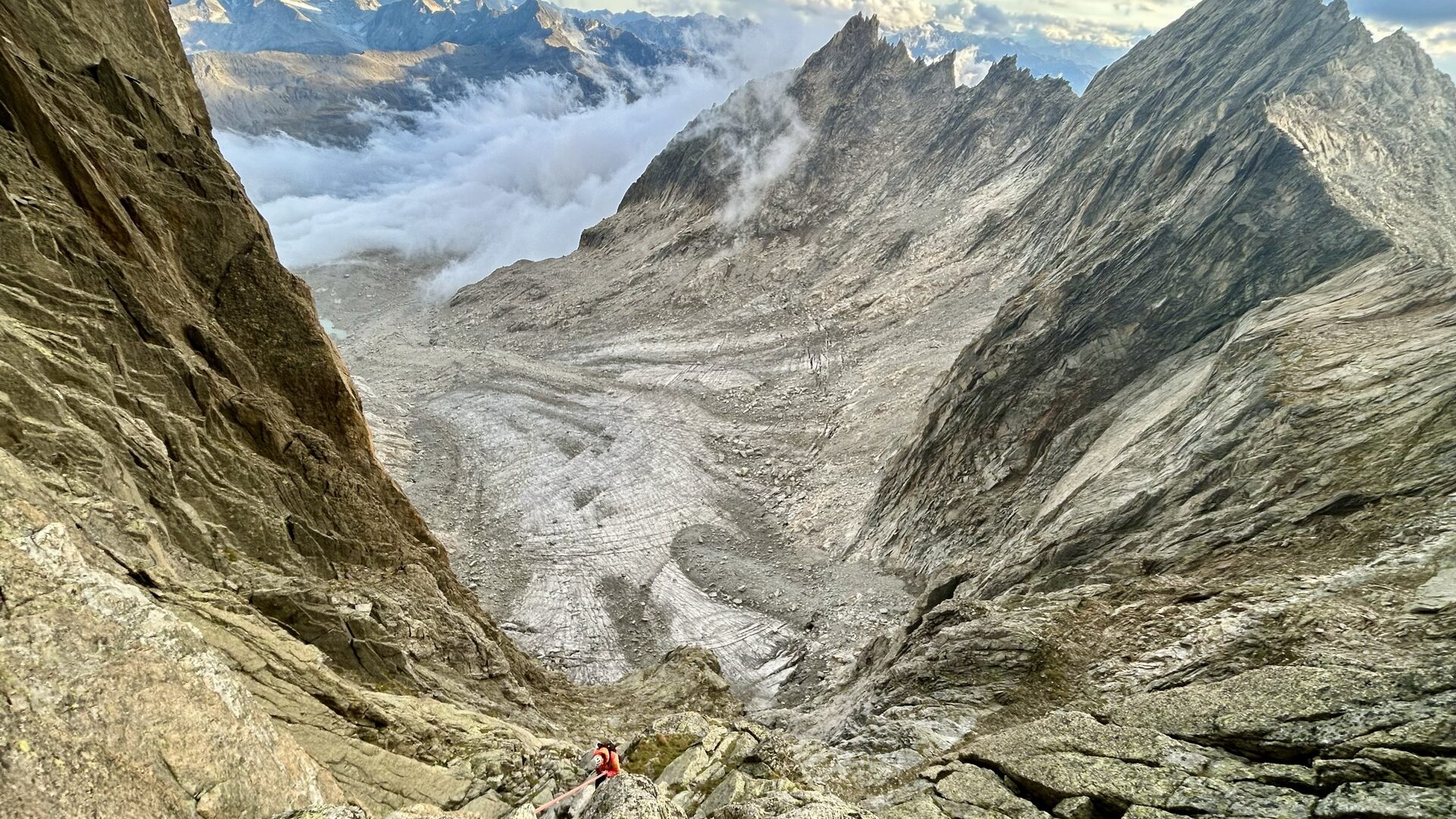
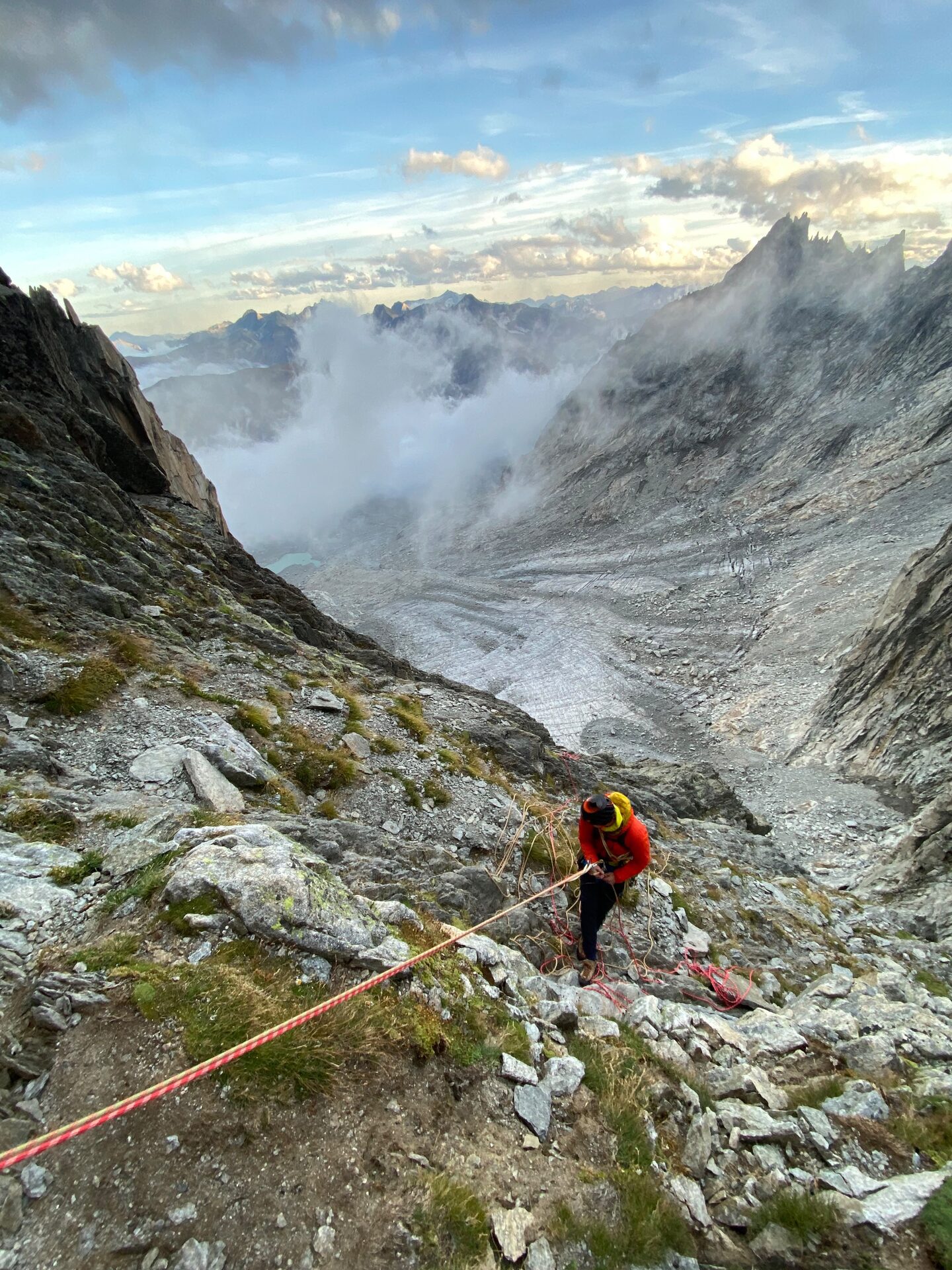
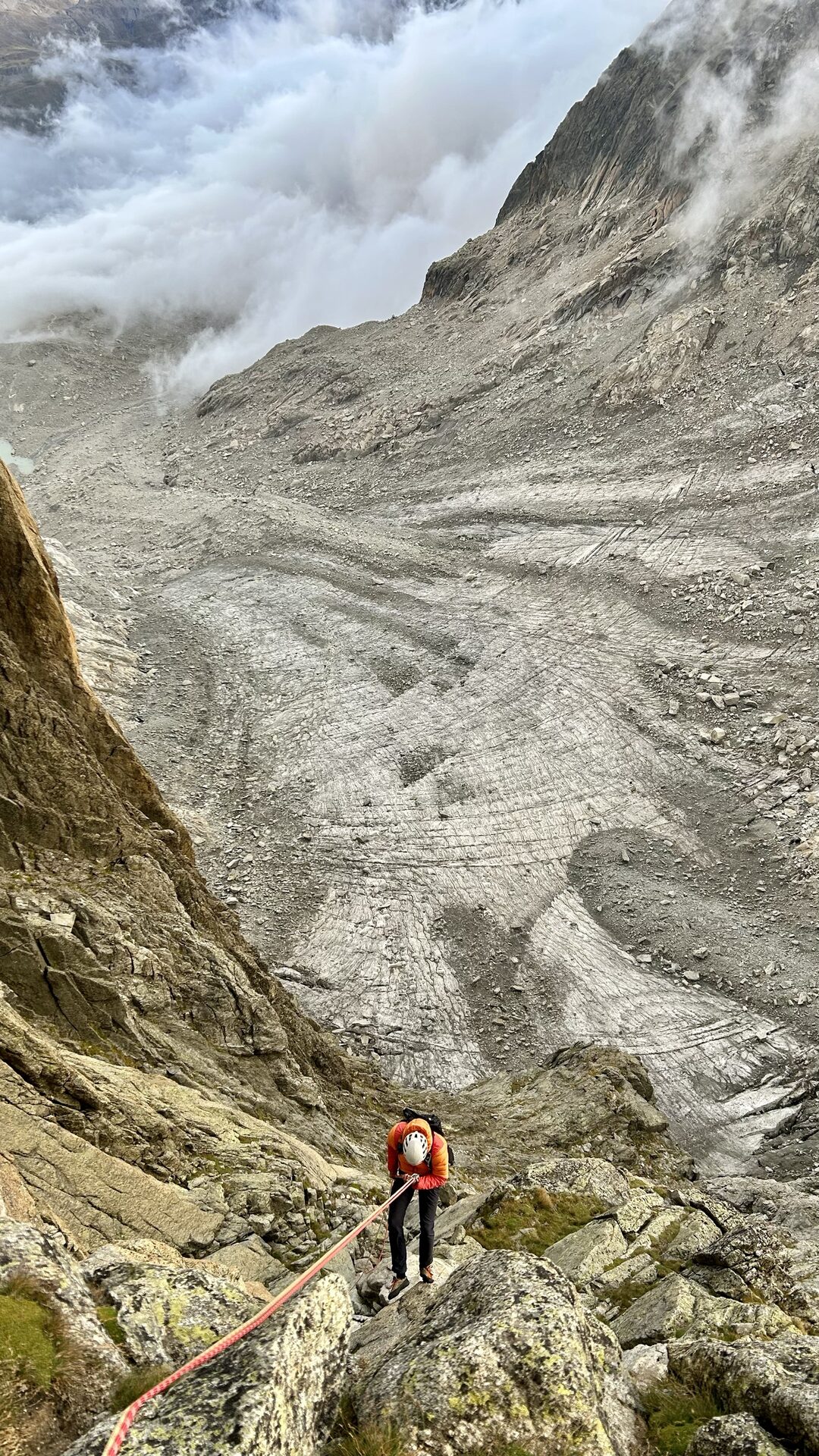
All in all an amazing route. Thanks to Emil for another great adventure and great pictures.
Logistics
Approach
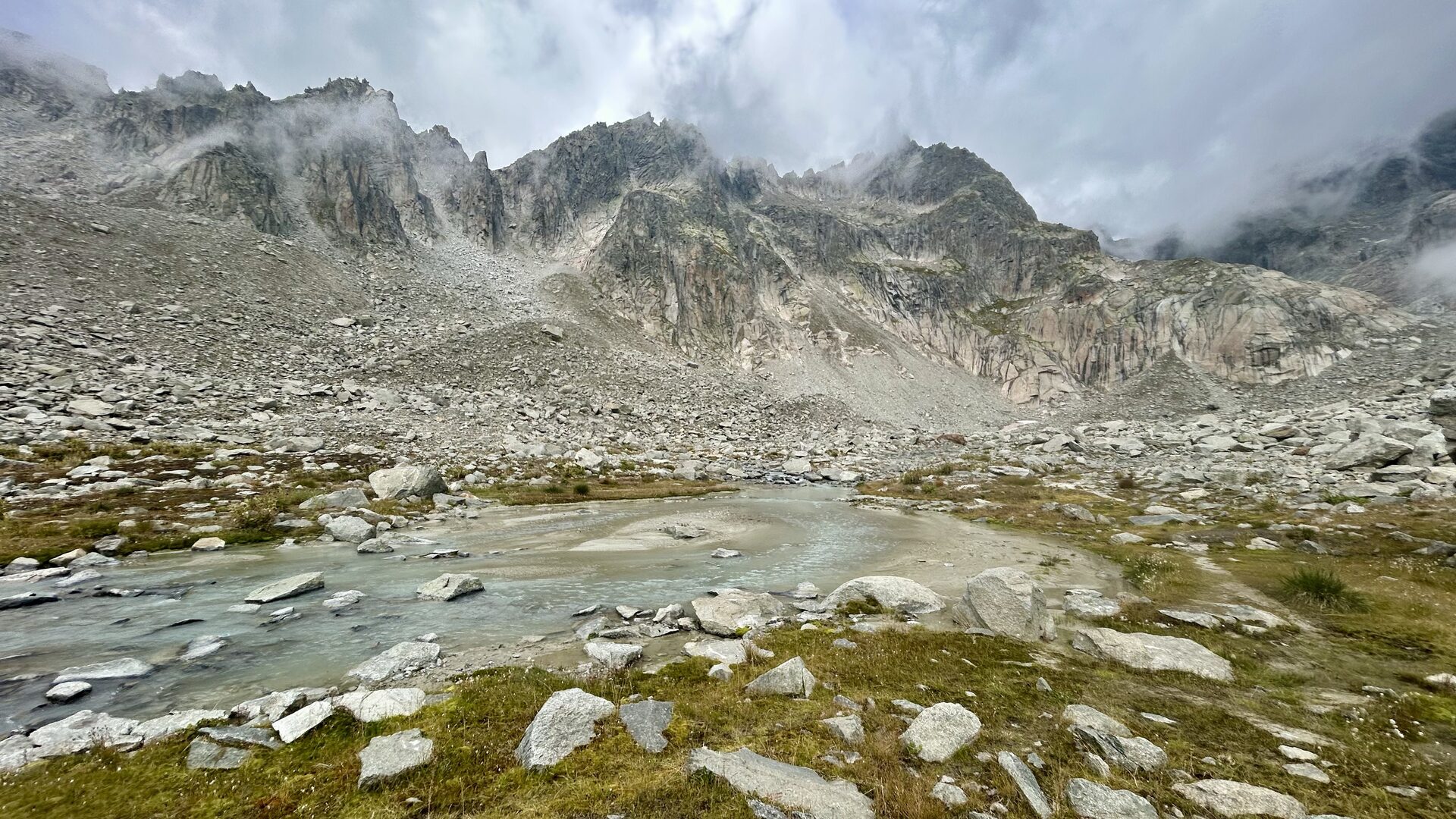
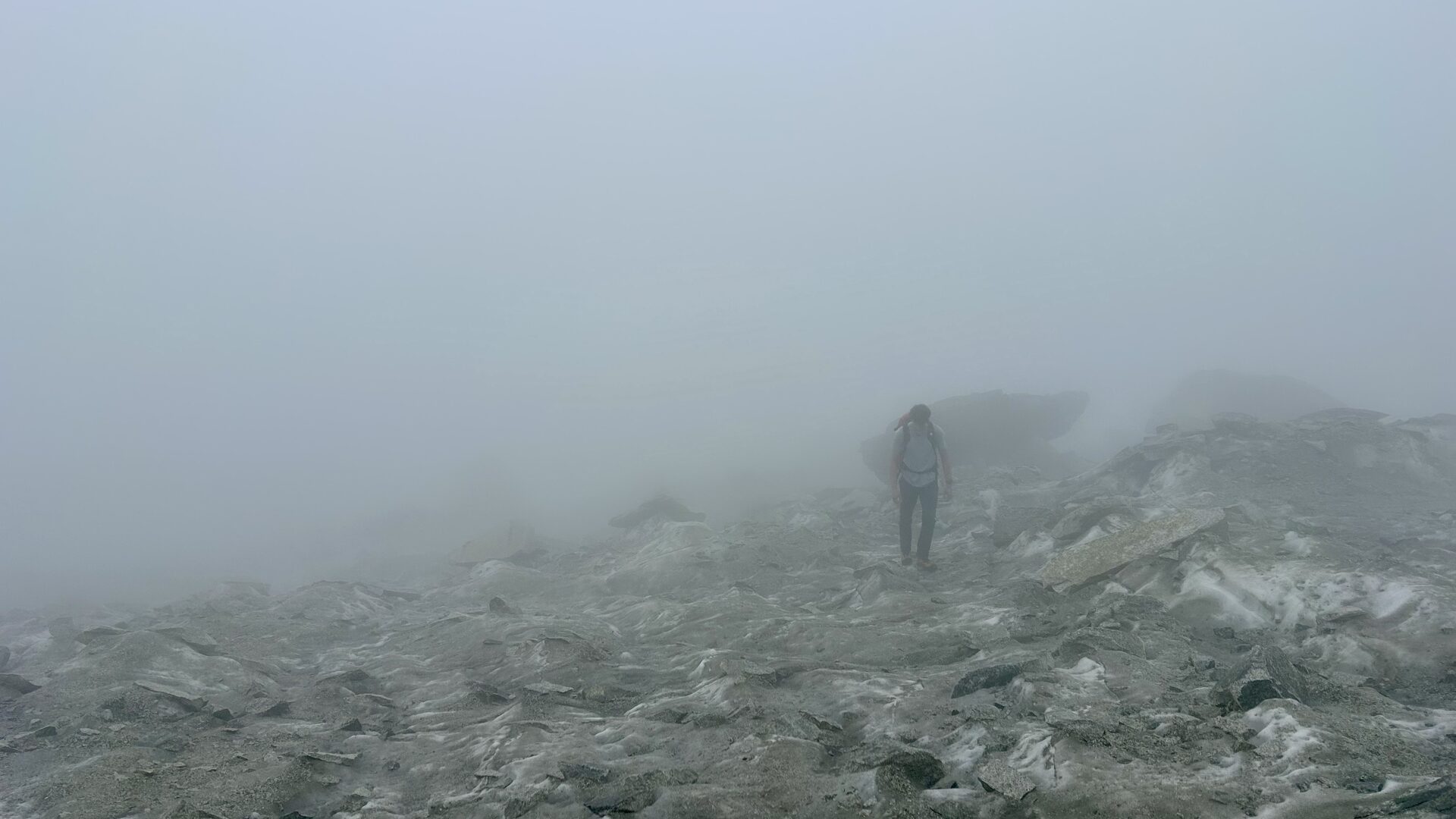
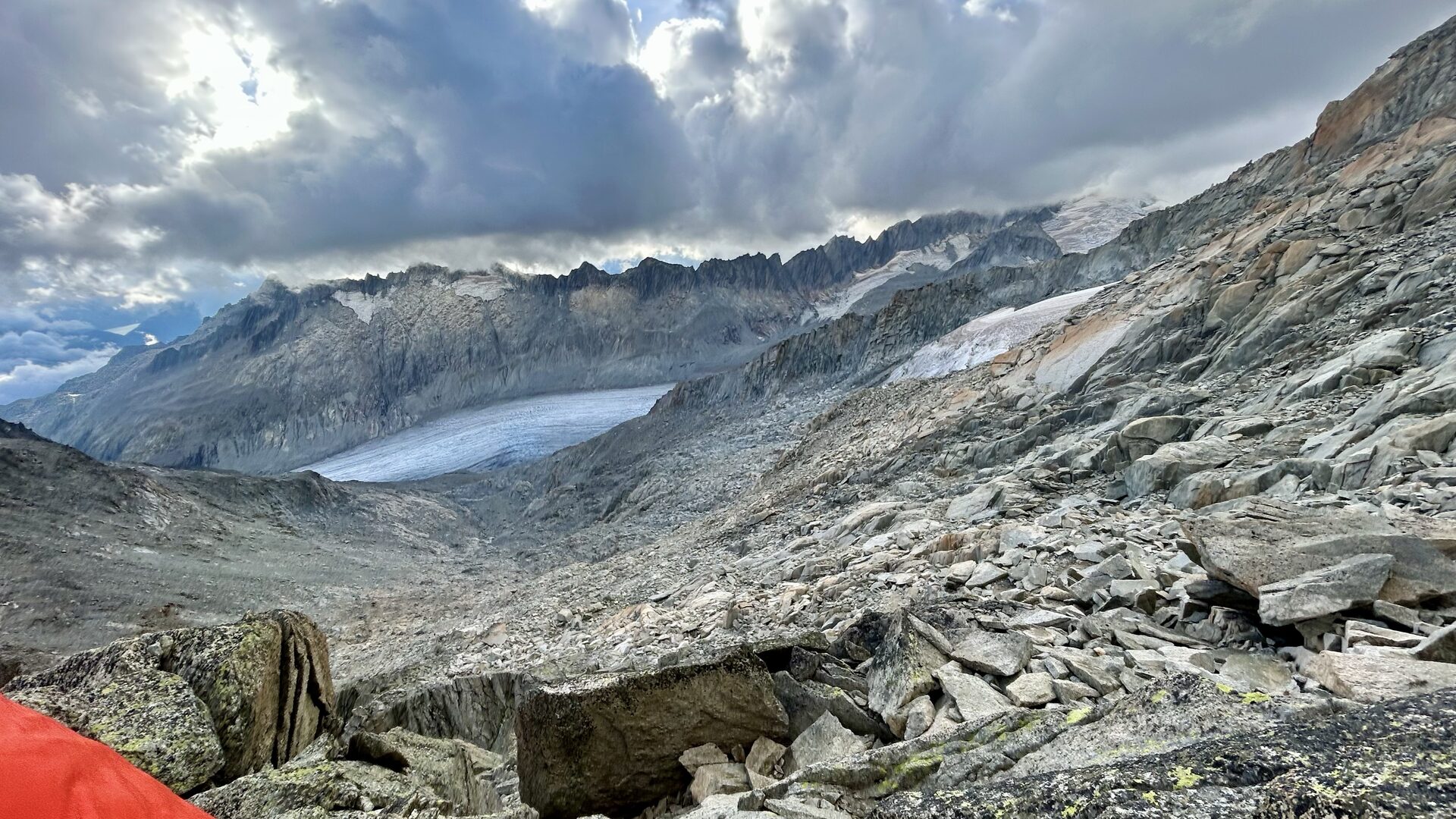
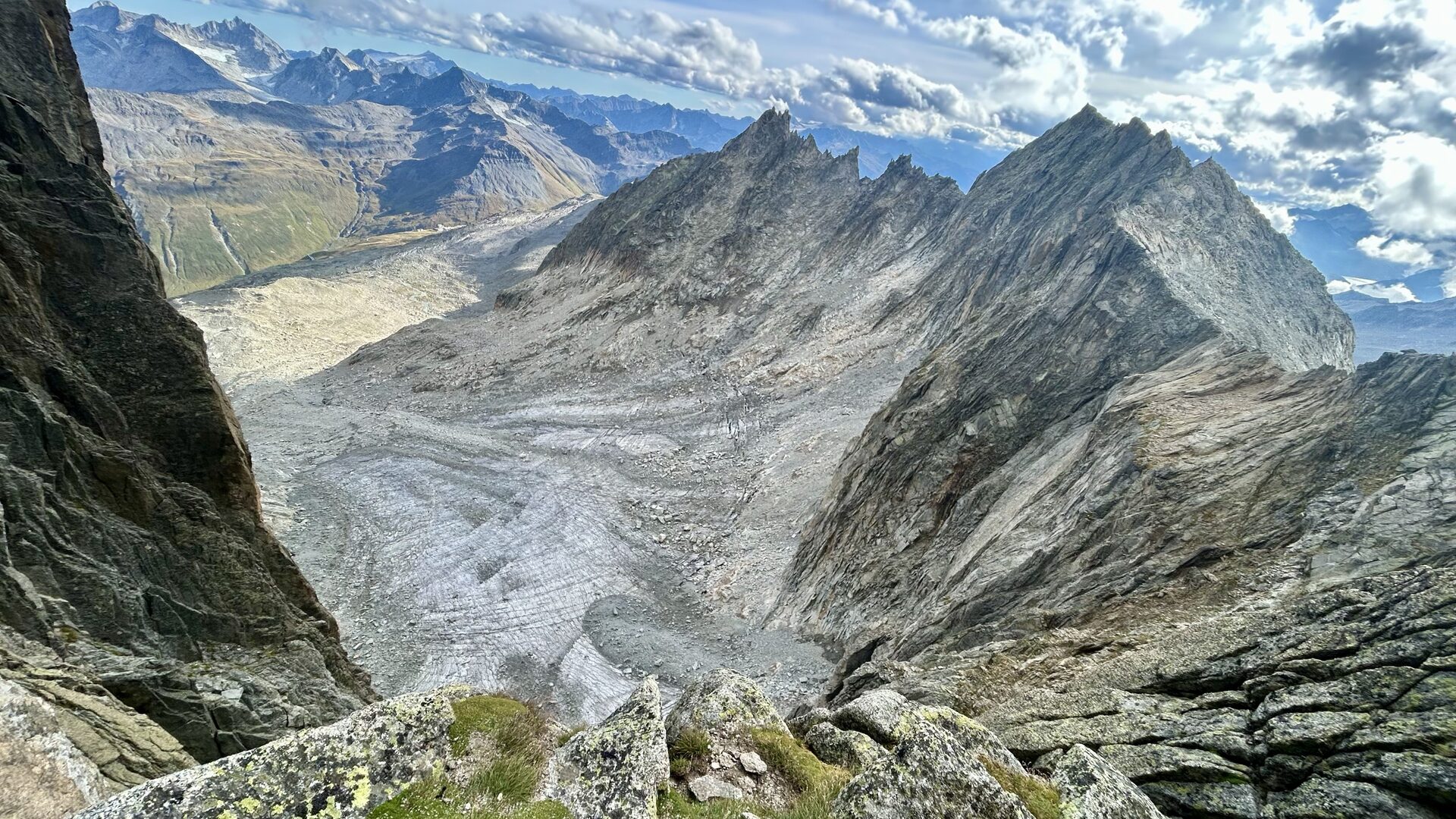
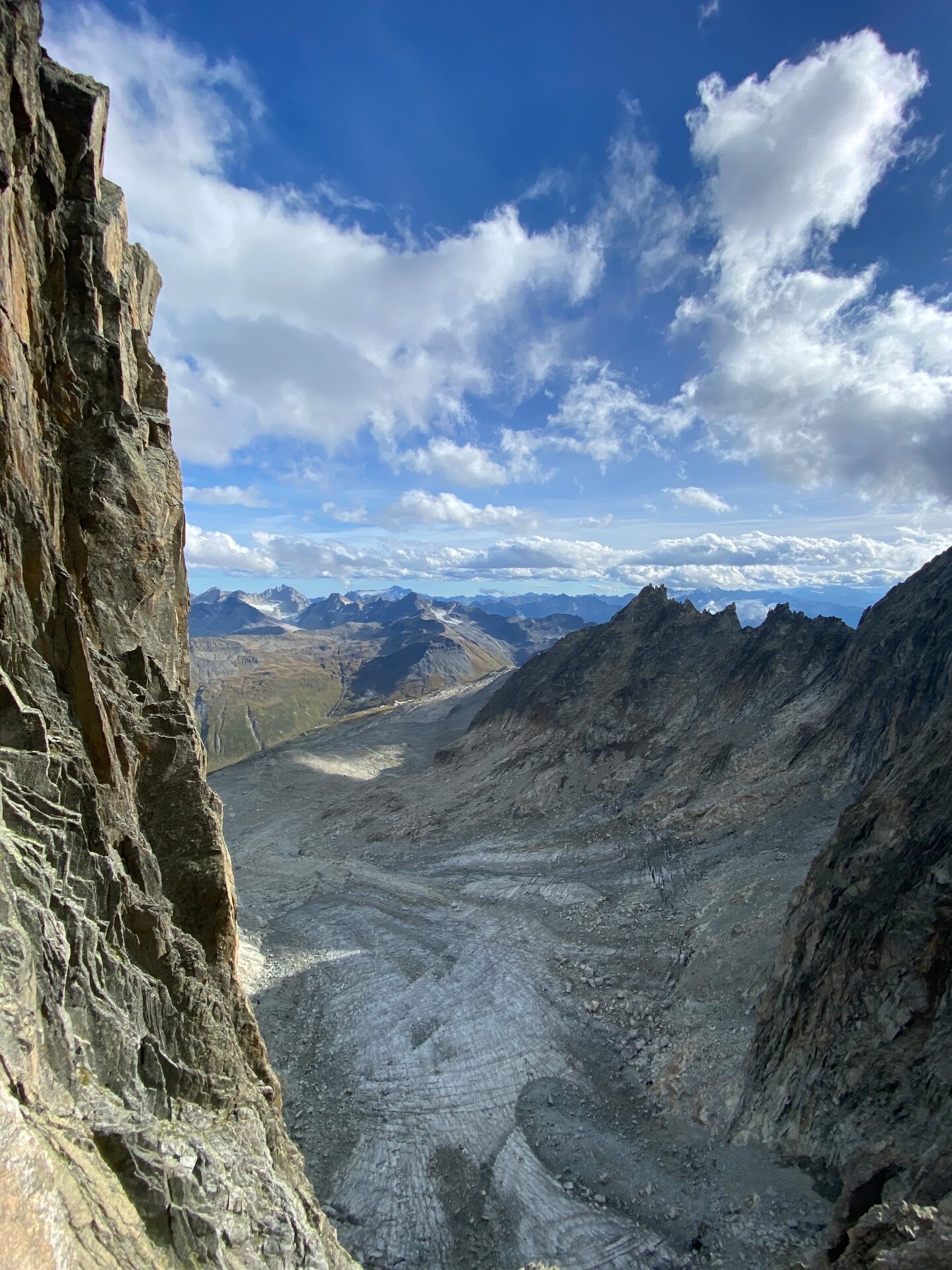
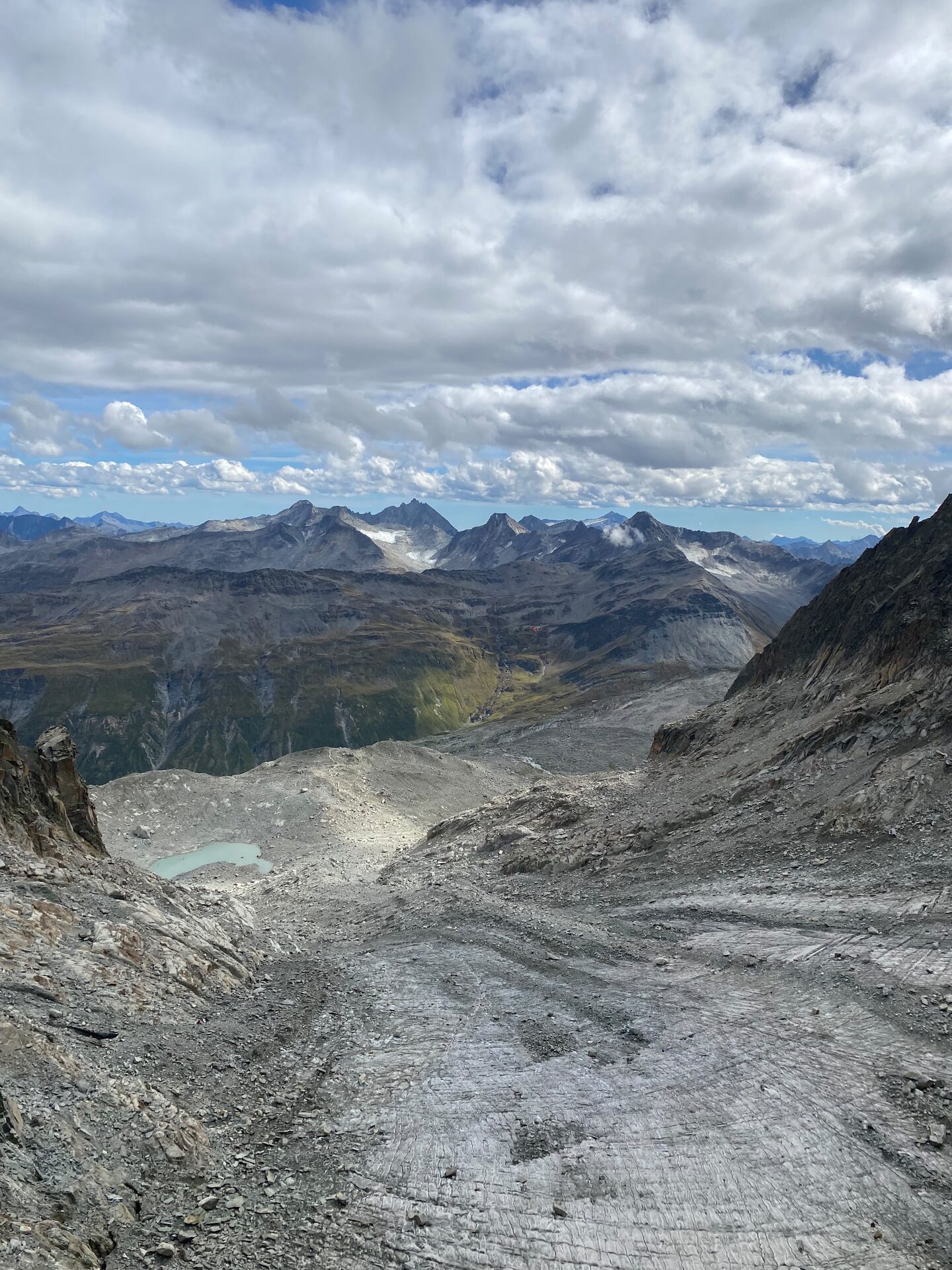
From the Furkapass (Hotel Furkablick), the Sidelenhütte path up over the moraine to the Sidelengletscher, then across the plateau to the foot of the wall — about 1 h 50.
Gear
- 2×50 m rope; ~8 quickdraws; belays bolted.
- A small set of cams and a small set of nuts is helpful.
- Protection is rated so-so — a partly run-out old-school line, so climb accordingly.
- No ice axe and no crampons were needed for the approach in September 2026.
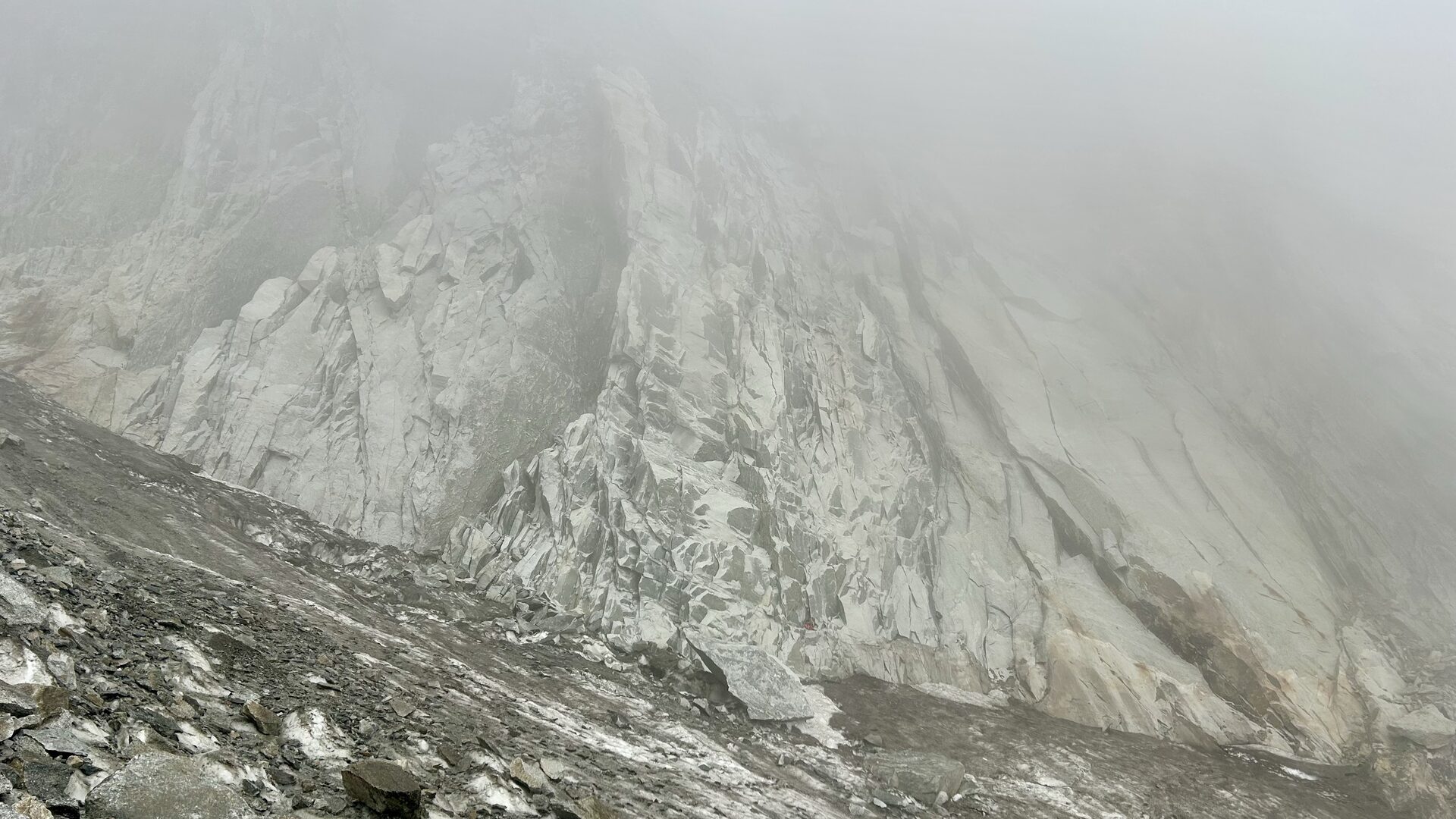
- There was no bergschrund at the start, though getting onto the starting ledge was a bit sketchy — nothing desperate.